Human rights
Roche respects and proactively supports Human Rights.
1. Our Commitments
“Protect, Respect and Remedy” are the three pillars of Harvard Professor John Ruggie’s framework which was approved by the UN Human Rights Council and adopted in the UN Guiding Principles on Business and Human Rights (UNGPs) in 2011.
Roche fully supports and implements the UNGPs, and is equally committed to supporting:
The UN Sustainable Development Goals (SDGs)
The 10 UN Global Compact Principles
The Universal Declaration of Human Rights; and
The International Labour Organization (ILO) Declaration on Fundamental Principles and Rights at Work.
This commitment is embodied in our
To fulfill its corporate social responsibility, Roche is committed to delivering continuous improvement and maintaining best practice at a policy and process level, as well as in its management approaches.
2. Our Impact on Society
For more than 120 years, both in our own operations and our value chain, Roche has in many ways fostered human rights globally. Within our sphere of influence, we are proactively focussing on improving global human rights bydoing no harmandmaking animpactful contribution.
By applying the principle of ‘knowing and showing’, Roche is committed to avoiding adverse impacts on human rights by focussing on the perspective of the rights holder.
3. Our Operations
Risk Assessment
We have implemented a risk management program designed to systematically identify, assess, mitigate and adequately manage the risk of human rights violations. The four identified top risks are:
- Data Privacy
- Safe Place to Work (incl. health risks)
- Working Conditions (incl. Safeguarding against child, forced or compulsory labour, harassment and discrimination)
- Employee Association
Real World Data (RWD) and Real World Evidence (RWE) are seen as a potentially rich and underutilized source to generate insights as to how approved diagnostics systems and medicines affect outcomes for patients under real world conditions. We are committed to collecting and using data in a lawful, fair and legitimate way and will always respect the privacy of individuals in order to earn and deserve their trust.
Vulnerable group: Patient
We are committed to preventing and mitigating identified risks relating to a safe workplace. Roche observes all regulations in the area of safety and health at work, not only in respect of all its employees but also in respect of anyone else potentially affected by its activities. Employees must comply with the applicable safety, security, health and environmental legislation in force at Roche and workplace risk assessments with mitigation plans are performed in every affiliate.
Vulnerable groups: Employees of Roche and of our business partners.
Roche condemns all forms of child, forced or compulsory labour. Roche tolerates the employment of juveniles only where their employment is lawful and only under conditions which adequately safeguard their well-being. Roche does not tolerate:
any form of psychological, physical or sexual harassment, or any other violation of the dignity and respect of employees in the workplace.
any form of workplace discrimination based on gender, age, ethnicity, national origin, religion, disability, sexual orientation, HIV/AIDS status, citizenship, generic information or any other relevant characteristics protected under the applicable law.
Vulnerable groups: Employees of Roche and of our business partners.
Roche complies with all laws relating to employees respecting the right of employees to join a legally recognised employee association. We strive to set up and maintain an open dialogue with employee representatives. All of our operations respect the right of employees to freedom of association and collective bargaining. Employees can choose to be represented by unions, works councils or similar organisations, including the Roche Europe Forum, where employees from every Roche company in Europe are represented.
Vulnerable groups: Employees of Roche and of our business partners.
Roche also expects of its suppliers and other business partners to comply with all laws and regulations, relating to the above mentioned risks.
Embedded in our operations
We embed human rights in our existing operations and daily business by multiple means:

(i) Benchmark
Within and beyond Industry.

(ii) Assess the actual and potential human right risks
Within Roche and while doing business with our business partners.

(iii) Increase awareness
Local and global initiatives; 98% completion rate of global eLearning course.

(iv) Foster due diligence
Inclusion of human rights aspects in the due diligence of business partners.
(v) Enhance legal framework
Having solid agreements in place with our business partners.

(vi) Collaborate in collective actions
Together with our peers we foster human right protection (e.g. as member of Pharma Supply Chain Iniatitive (

(vii) Transparent communication
Via multiple internal and external channels.
All Roche departments and functions are contributing to respect and protect Human Rights. For example does every site has an Human Resource contact supporting compliance with related principles, such as discrimination and harassment, as outlined in the
4. Our Collaborations
We conduct arisk-based due diligence on actual and potential business partners, such asdistributors, suppliers and service providers.Our expectations of them are basically the same as those that we have for ourselves. In order to enhance transparency and within our sphere of influence, we also expect them to carefully check their own business partners.
Human Rights aspects are an integral part of the due diligenceundertaken at Group and Affiliate level, this includes by way of example:
on due diligence process, including how to develop and implement it for local markets. More specific toolkits have been elaborated on regional level.
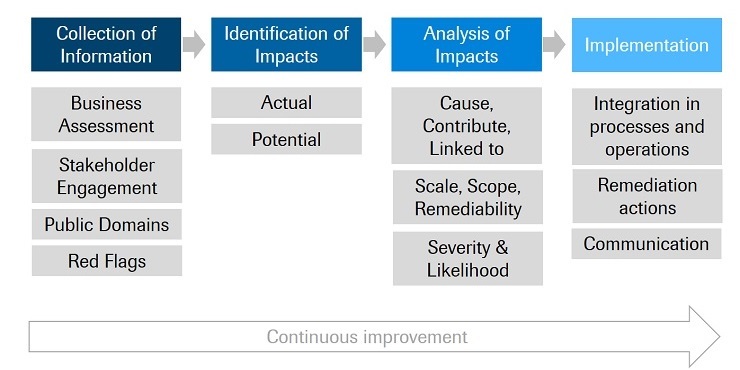
Human Rights Assessment and Implementation Framework
IT Tools
supporting a consistent end-to-end process, which allows for systematic and periodic repeated due diligence and risk assessments.
Roche uses ascalable risk algorithmto identify suppliers with a high potential for human rights violations. The algorithm focuses on the following four main risk factors: Country, Industry, Proximity to Roche and Reputation. It also factors in the vulnerable population (identified as children, underage workers, migrants, indigenous peoples, local underprivileged communities and people with low levels of education).
By working collectively with the Pharmaceutical Supply Chain Initiative (
Further, we have enhanced the human rights risk process to identify potential issues amongst our critical supplier’s suppliers (“critical tier 2 suppliers”). We did not receive any reports about critical findings among tier 2 suppliers.
Further information and how Roche focuses on suppliers with whom Roche spends 25% or more of their revenue:
5. Our Reporting
Employees as well as business partners are encouraged to speak up if they believe in good faith a human right violation has occurred.
"All human beings are born free and equal in dignity and rights.”
Universal Declaration of Human Rights
Article 1, 1948
Our local and regional Compliance Officers serve as contacts for allegations, which are then reported via the
All allegations are taken seriously and are objectively investigated. If the allegation is substantiated, we take appropriate remedial measures.
In 2019, there were8 substantiated incidentsrelated to human rights, all of them related to discrimination and harassment. Out of 8, 7 were Roche internal, and one Roche external, i.e. by a Roche business partner. All of those cases triggered a termination (7 Roche employees, one business partner).
We measure the compliance of our suppliers with our human rights standards through remote and onsite audits, our Supplier Sustainability Assurance Visit (SAV) program. In 2019:
We conducted 50 SAVs at 50 Suppliers (8 in Europe, 9 in EEMEA, 18 in APAC, 1 in North America and 14 in LATAM).
We had 102 Human Rights related observations, such as excessive overtime and inadequate pay of social benefits.
We elaborated for each of the 50 suppliers acorrective action plan (find an example
detailed list 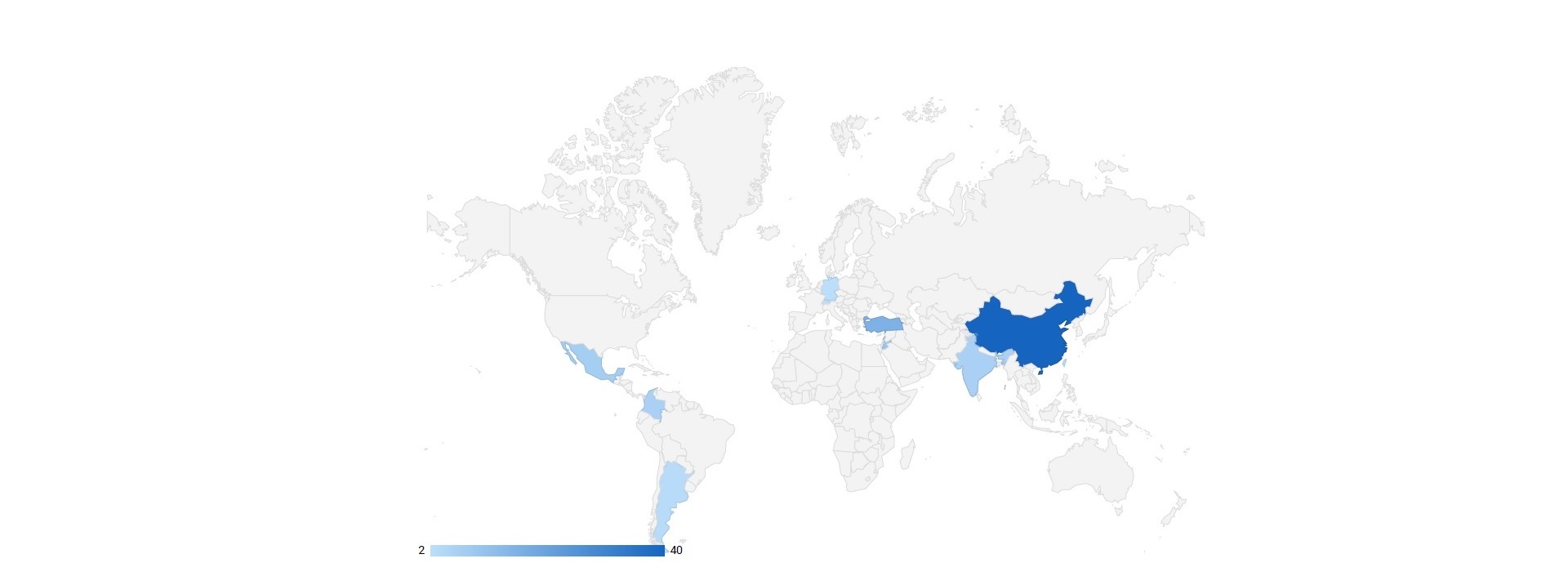
Sustainability Assurance Visits 2019 - Number of Human Rights Findings per Country
Our employee policy
Our Employment Policy is based on the Roche Corporate Principles and governs employment practices across the Group.

Risk management
Identifying, analysing and responding appropriately to business risks and opportunities is vital to attaining Roche’s business objectives, protecting the interests of stakeholders and meeting legal requirements.

Working with suppliers
Our partners play an important role in helping us deliver healthcare solutions.
Related links
This website contains information on products which is targeted to a wide range of audiences and could contain product details or information otherwise not accessible or valid in your country. Please be aware that we do not take any responsibility for accessing such information which may not comply with any legal process, regulation, registration or usage in the country of your origin.